The Search for the King: The Contemporary Record
This page reproduces the contemporary record of the search for King Ernest V, from the evening of Monday 25 September 2028, when the royal flight Kittyhawk sent a distress call east of Newfoundland that ended with its own call sign, to the night of Friday 29 September, when the King was brought to New Westminster, unconscious, three and a half days after the aircraft went into the sea.
The American Broadcasting Corporation carried continuous coverage on its national service from the first evening. Its reporting from New Albion and from London ran under the ABC World News banner, as the corporation’s foreign reporting always does, and the national service carried it. Stephen Alcott presented it from Continental House at every moment reproduced here. The correspondents were Martin Pruitt, of the ABC’s Boston newsroom, who was in Halifax from the morning of 26 September; Leah Marsden, sent from New Westminster to St John’s the same day; Jonah Feld, of the BBC in London, whose reports ABC World News carried under the two broadcasters’ exchange arrangement; Grace Ebanks, the corporation’s Crown correspondent; and Delia Moreno, of ABC Parliament.
Two things in the record belong to the corporation rather than to the event. For sixty-nine minutes on the first night the ABC knew that the missing aircraft was the royal flight and did not say so, while every other national broadcaster in the Realm did. And on the fourth day, within hours of the rescue, its correspondent in Halifax put to the rescue coordination centre the question the Realm has been asking since, whether the search should have been widened after the storm, and reported that it had not been answered.
The transcripts are reproduced as broadcast. Times are Eastern.
The first night, 25 September
Kittyhawk transmitted its distress call to the oceanic controllers at Gander at about 5:47 p.m., and nothing more was heard from it. The rescue coordination centre at Halifax, which is New Albion’s, took charge of the search within the hour, and at about half past seven it said publicly that it was searching for a Royal Air Force aircraft that had sent a distress call east of Newfoundland. It did not say whose aircraft it was.
That the King was to fly to Ottawa that afternoon on a private visit had been announced. The connection was there to be made by anybody who had read the announcement.
The first transcript, 7:34 p.m.
ALCOTT: We are interrupting the programme for a report from the North Atlantic.
The rescue coordination centre at Halifax, in New Albion, says that it is leading a search for an aircraft that sent a distress call east of Newfoundland at about a quarter to six this evening, our time. It has described the aircraft as a Royal Air Force flight bound for Ottawa. It has said nothing about who was aboard.
Martin Pruitt is in our Boston newsroom. Martin, what do we know.
PRUITT: Stephen, we know very little, and I want to keep to what we know.
The centre says the call was made on the oceanic frequency to the controllers at Gander, that it was a distress call, and that nothing further was heard from the aircraft. It has not said what the emergency was, and I do not think it knows. It has aircraft and ships of New Albion heading for the last position the controllers had, and it has asked for help from anybody who can give it, which will mean the Royal Air Force and the Royal Navy and very probably our own services.
It was dusk out there when the call was made, and it is dark now. They will be searching at night.
ALCOTT: And the sea.
PRUITT: The water at this time of year out there is cold enough to kill a person in it within hours. An aircraft of this kind carries life rafts, and people have lived for days in life rafts. I am not going to put a number on anything tonight, and I would treat anybody who does with some care.
ALCOTT: There is a good deal of speculation this evening about who was aboard.
PRUITT: There is.
ALCOTT: Then I will say this once and plainly, so that nobody watching thinks we have not heard it. The ABC is not reporting who was aboard this aircraft. Nobody entitled to confirm it has confirmed it. When somebody does, we will tell you at once, and we will tell you who they were.
Until then you will hear from us what is known, and not what is being said.
Sixty-nine minutes
At 8:31 p.m. the Continental Network, the Realm’s largest commercial broadcaster, reported that the King had been aboard, attributing the report to sources in London. Within twenty minutes every other national broadcaster had followed it. The ABC did not.
The decision was taken by the Editor-in-Chief, Hollis Barr, by telephone to Continental House at about twenty to nine, and it is the kind of decision the corporation’s constitution puts in one pair of hands so that it cannot be taken by a committee or blamed on one. The corporation knew by then, from its own sources, that the missing aircraft was the royal flight. It went on saying, three times before twenty to ten, what Alcott had said at 7:34: that it would report who was aboard when somebody entitled to say so had said so.
The corporation’s own figures, published later, show that it lost more than a third of its audience in that hour. It had it back by midnight.
At 9:40 p.m. the Governor-General spoke from Government House.
The second transcript, 9:40 p.m.
ALCOTT: We are going to Government House, where the Governor-General is about to speak.
LUJAN GRISHAM: The aircraft carrying His Majesty from London to Ottawa has been lost off the coast of Newfoundland. The King is missing.
A search is under way under the direction of New Albion, and ships and aircraft of this Realm are taking part at New Albion’s request.
My commission continues. The Crown’s business in the Realm will be conducted tomorrow as it is on every other day.
I ask for your prayers for the King and for those travelling with him, and for the crews who are searching for them tonight.
ALCOTT: [Pause. Three seconds.]
The Governor-General has confirmed that the King was aboard the aircraft that sent a distress call east of Newfoundland at a quarter to six this evening, and that he is missing.
I want to say one thing before anything else, because you are entitled to know it. The ABC has known for some time this evening that the missing aircraft was the royal flight. Other broadcasters reported more than an hour ago that the King was aboard it. We did not, because nobody entitled to confirm it had done so, and the decision not to was taken by the Editor-in-Chief, whose decision it is. It has now been confirmed.
Grace, what else has Government House said.
EBANKS: Stephen, very little beyond the statement, and I think deliberately.
The household has released two names: the King’s, and that of his Private Secretary, Sir Edmund Stanier, who was travelling with him. There were eight people aboard. The names of the other six are being withheld at the request of their families, and we will not be reporting them until they are released.
The Governor-General took no questions. The sentence people here will read most closely tonight is the one about her commission. It means that nothing constitutional has to happen in the Realm tonight, and nothing will.
ALCOTT: And the Prince of Columbia.
EBANKS: The household says that the Prince is at Columbia Palace. He is fifteen. It has said nothing else about him, and the ABC will report nothing about him that the household has not said or that anybody could not see in the street.
ALCOTT: Martin, the search.
PRUITT: The centre at Halifax says that aircraft and ships of New Albion are in the area of the aircraft’s last reported position, that aircraft of the Royal Air Force and ships of the Royal Navy are on their way, and that it has asked for the Royal American Navy and the Royal American Air Force, which I understand have agreed. They will search through the night.
No emergency beacon has been heard that the centre is willing to talk about, and I would not read anything into that yet, in either direction.
ALCOTT: We will stay with this through the night.
At about 10 p.m., three in the morning in London, the British government delegated the King’s functions in right of Great Britain to the Queen. The ABC reported it at 10:20, on the BBC’s report from London, and stayed on the air until morning.
The first day, 26 September
The third transcript, 7:00 a.m.
ALCOTT: It is seven o’clock. The King has been missing for thirteen hours.
Nothing has been found. The search went on through the night and was widened at first light. Martin Pruitt is at the rescue coordination centre in Halifax.
PRUITT: Stephen, the centre briefed at six. More than a dozen aircraft and nearly as many ships, from three navies and New Albion’s own service, searched the area around the last reported position through the night, and they found nothing: no wreckage, no debris, and no signal from an emergency beacon. At first light the area was widened.
I asked the centre what the absence of any wreckage means. I will give you their answer in their own words, which was that it means they have not found it.
ALCOTT: Jonah, London.
FELD: Stephen, at about three o’clock this morning, London time, the British government delegated the King’s functions in right of Great Britain to the Queen. It did so under its regency legislation, which allows the sovereign’s functions to be delegated when he cannot perform them, and never merely because he is away. It is the first time a missing King has been treated as a King who cannot act.
The government was careful to say what the delegation is not. It is not a step towards anything, and nobody in London is presuming anything this morning. The heir is fifteen and there is nobody close behind him in the line, and the Queen was the one adult to whom the functions could go.
The Queen left Stockholm this morning on a Swedish government aircraft, and she is flying to New Westminster, to be with her son.
ALCOTT: Here, Parliament has been recalled and will sit at two o’clock, and the Prime Minister will make a statement. The household says the Prince of Columbia will attend prayers for the King at Columbia Cathedral this morning.
We will be back at Halifax at the top of every hour, whether or not there is anything to report, because the absence of anything to report is itself the news.
The Prince was photographed arriving at the cathedral and leaving it, and said nothing. At two o’clock both Houses sat, and the Prime Minister, Caleb Whitlock, Lord Whitlock, made his statement in the Lords and then answered at the bar of the House of Commons, the first Prime Minister to do so, before the Commons referred the question of Article II.8 of the Charter to the law officers. The Queen arrived in the afternoon and was received by the Governor-General. The ABC’s coverage of the sitting is not reproduced here.
The fourth transcript, 9:00 p.m.
ALCOTT: Twenty-seven hours. The search has found nothing.
PRUITT: The centre’s evening briefing was short. Nothing has been found: no wreckage, no debris, no survivors and no signal from any beacon. The search will continue through the night.
The centre raised one thing without being asked, which was the weather. A storm is forecast to cross the search area tomorrow. They did not say what it would mean, and they did not need to.
ALCOTT: Leah Marsden is in St John’s.
MARSDEN: Stephen, the search aircraft have been coming and going from the airport here all day, and people have been watching them from the road above it, in cars, not saying very much.
This is a town that knows this sea. I have been told the same thing three times today by people who had no reason to say it to me, which is that people come back from it, sometimes, when nobody expects them to. I am telling you that because it is what they said, and not because anybody knows anything.
The second day, 27 September
The fifth transcript, 12:30 p.m.
ALCOTT: The storm that was forecast last night has arrived, and for most of this morning there has been no search from the air. Leah.
MARSDEN: Stephen, the search aircraft have been on the ground here since early this morning, and you can hear why. The wind has been blowing hard since before dawn and it has been raining sideways most of the morning.
The centre says the ships are still out there, on station, where the sea allows, and that it allows a good deal less than it would like. The aircraft will go back up as soon as they can, and not before.
ALCOTT: I am going to ask you the question people are asking us, and I want you to answer it the way we have been answering it. What are the chances.
MARSDEN: Stephen, the people who know are not saying, and the people who are saying do not know.
The centre will not put a figure on it, and I am not going to put one on it for them. What the centre did tell me is that a life raft can keep people alive for a long time, and that it is searching for people and not for wreckage. I think they wanted that said, and I have said it.
The sixth transcript, 4:10 p.m.
ALCOTT: Two London newspapers are reporting this afternoon that the British government has opened its plans for the King’s death. Jonah.
FELD: Stephen, the reports say that the government opened the plans, which are known as Operation Tower Bridge, this morning, as a precaution. The ABC has confirmed that from two people in a position to know. The government will not comment on the plans, which it never does, and it has repeated that nobody is presuming anything.
It has also placed on standby the plan for bringing home a sovereign who dies abroad, which is called Overstudy.
And I have been told one more thing, which I have from one source only and so give you as that. The first step of Tower Bridge is a telephone call made by the King’s Private Secretary. The Private Secretary is aboard the aircraft.
ALCOTT: Grace, has the Realm opened its own.
EBANKS: Government House was asked that this afternoon, and it repeated that the King is missing, which is an answer to a different question and, I think, the answer it meant to give.
One other thing, Stephen. A friend of the Prince’s was photographed arriving at the palace gates this afternoon. He is fifteen, and the ABC is not naming him.
The air search resumed in the evening, over the area already planned. By the evening of 27 September nothing had been found.
The third day, 28 September
The weather cleared overnight and the search went back out in strength. In the middle of the morning a search aircraft sighted floating wreckage close to the area that had been planned before the storm. The centre held the announcement for an hour at the household’s request, and in that hour the Queen went to her son’s school and told him herself. By noon the press knew where he was. The ABC did not report it.
The seventh transcript, 11:52 a.m.
ALCOTT: The rescue coordination centre at Halifax has announced that wreckage has been found in the sea. Martin.
PRUITT: Stephen, the centre says that a search aircraft sighted floating wreckage in the middle of this morning, close to the area that had been planned for the search before yesterday’s storm. It has released a photograph. It says the markings on one piece of it identify it as the King’s aircraft, and that ships are on their way to recover what they can.
It says that no one has been found.
The centre held this announcement for an hour at the household’s request, so that the family could be told first. I think that was the right thing to do, and I think you should know that it was done.
ALCOTT: I want to be careful about what this means, because it is going to be taken all afternoon to mean one thing.
It means that the aircraft went into the sea. It does not tell us anything about the eight people who were aboard it. Until somebody who knows tells us something about them, neither will we.
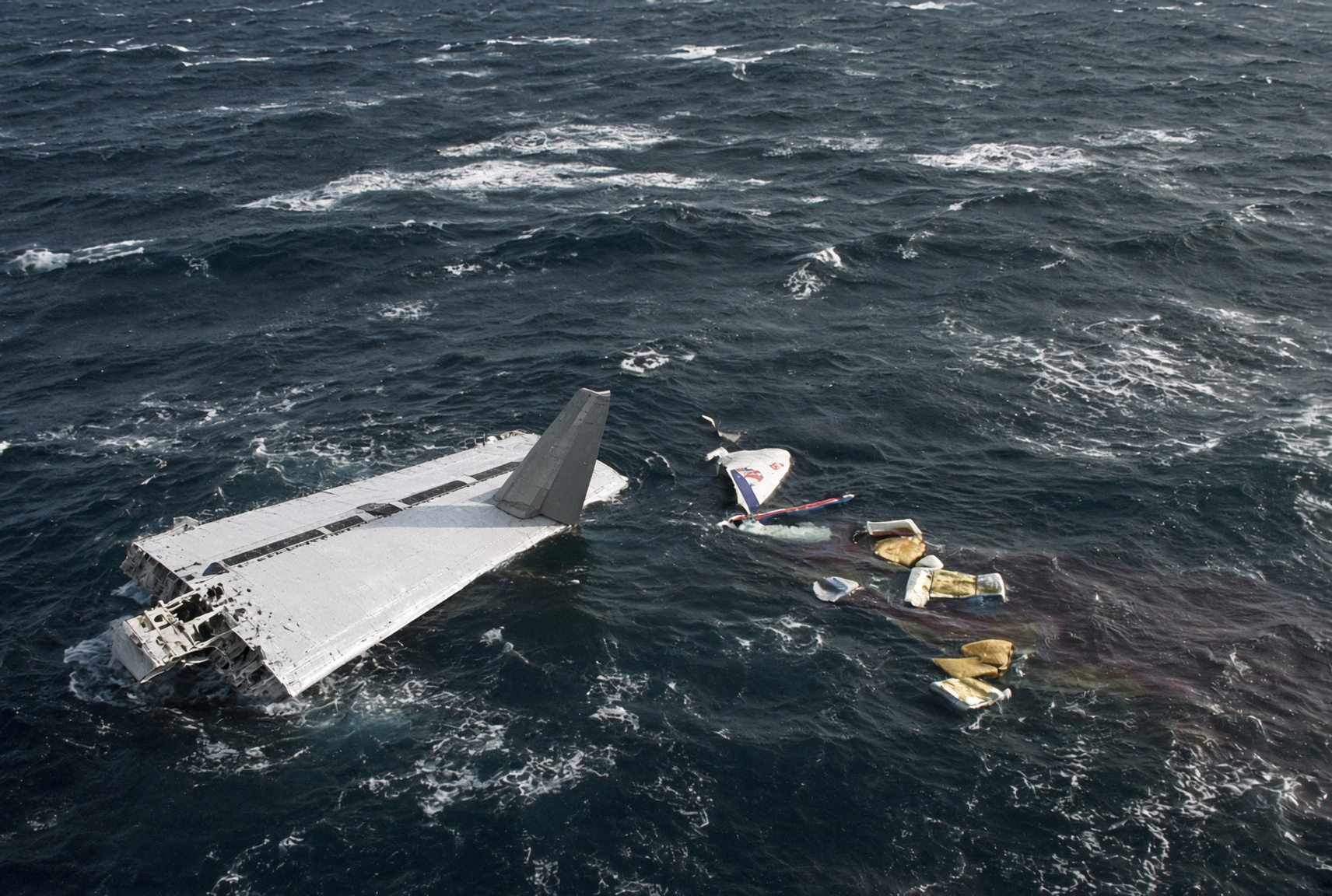
The finding was widely taken to mean that nobody had survived. In the afternoon ships recovered part of the aircraft. The Royal Air Force and the household released the names of all seven people aboard with the King, with their families’ consent. In London the British Prime Minister, Alistair Rennie, said that Britain would consider the question of the King’s death once the search had been formally ended.
The eighth transcript, 8:15 p.m.
ALCOTT: This afternoon the Royal Air Force and the Royal Household released the names of the seven people who were travelling with the King, with the consent of their families. I am going to read them.
The King’s Private Secretary, Sir Edmund Stanier. His equerry, Major Thomas Fenwick. His valet, Graham Pearce. An officer of his personal protection, Inspector Daniel Mensah. And the crew, from the royal squadron: the captain, Squadron Leader Claire Holloway; the co-pilot, Flight Lieutenant Owen Price; and the steward, Sergeant Megan Tranter.
[Pause. Four seconds.]
Martin.
PRUITT: Ships recovered part of the aircraft this afternoon, and the centre says the search is now concentrated around the place where the wreckage was found. Nothing more has been found there, and no one.
ALCOTT: Delia, the Prime Minister has spoken this evening.
MORENO: He has, Stephen, from Charter House, which is the first time he has said anything outside Parliament since Monday. He said that the Realm would reach its own conclusion in its own time. He did not mention London and did not need to. It was read, within minutes, as an answer to Mr Rennie.
ALCOTT: And the household has issued the first words in the Prince of Columbia’s name since the loss. They are one sentence, and I will read it as it was issued: “I want to thank everyone who is searching for my father and for the people with him.”
The fourth day, 29 September
At about 10:20 a.m. the crew of the Kathleen Marie, a crab boat of Bay Bulls, south of St John’s, which was heading home from the crab grounds and was not part of the search, sighted a life raft well outside the area being searched, and a few minutes later its skipper radioed Halifax. The Governor-General had the news from Ottawa at about eleven and telephoned Columbia Palace before it was announced.
The ninth transcript, 12:01 p.m.
ALCOTT: We are interrupting this programme.
The rescue coordination centre at Halifax has announced that five people have been found alive in a life raft east of Newfoundland, and that the King is among them.
That is an official announcement by the government of New Albion, and so we are reporting it, and we are telling you whose announcement it is. Martin.
PRUITT: Stephen, the centre says that a fishing boat, a crab boat from Bay Bulls, south of St John’s, which was not part of the search and was on its way home, found a life raft this morning well outside the area being searched, with five people alive in it. It says the boat’s skipper radioed the centre at about twenty-five past ten, our time. It says the King is alive. It says a sixth person was in the raft and had died.
A helicopter of New Albion’s search and rescue service is on its way to the boat.
ALCOTT: The King’s condition.
PRUITT: The centre will not say, and I do not think it yet knows. It says that all five are alive. That is all it says, and I am not going to add to it.
The tenth transcript, 12:15 p.m.
LUJAN GRISHAM: The King has been found alive. He is being taken to St John’s, in New Albion, where he will be cared for.
Four of those travelling with him were found alive with him. Three have died: Squadron Leader Claire Holloway, Flight Lieutenant Owen Price and Graham Pearce. I ask for your prayers for them and for their families.
On behalf of the Realm I thank the crew of the Kathleen Marie, who found them, and everyone who searched.
ALCOTT: The Governor-General has confirmed that the King is alive, and that three of those who were with him have died.
Grace.
EBANKS: Stephen, Government House says that the Governor-General had the news from Ottawa before it was announced and telephoned Columbia Palace at once. The household says the Queen and the Prince are together at the palace. It has said nothing else, and the palace gates, which have had people outside them since Monday night, now have a great many more.
ALCOTT: Leah.
MARSDEN: Stephen, the helicopter is expected at the boat in the next half hour and will bring the survivors here, to the city’s main hospital. There is already an ambulance line outside it and a police cordon at the end of the road. And the crab boat has a name now, which the Governor-General has just given it. The Kathleen Marie. People here know it.
At about 12:40 p.m. the helicopter lifted the five survivors from the Kathleen Marie and flew them to St John’s. The boat turned for Bay Bulls with the body of the King’s valet aboard. In the afternoon the rescue coordination centre ended the search for survivors; ships stayed on the site of the wreckage to recover what they could of the aircraft. In London the British government closed Tower Bridge and stood down Overstudy. The household issued a second statement in the Prince’s name, which he had written himself.
The centre held a briefing at half past four.
The eleventh transcript, 4:36 p.m.
PRUITT: [At the briefing.] The raft was found outside the area you were searching. Should the search have been widened after the storm?
SPOKESMAN: The search will be reviewed, as every search is, and that question will be answered in the review. I am not going to answer it from here this afternoon.
PRUITT: Is that a no.
SPOKESMAN: It is not an answer, and I am telling you that it is not.
ALCOTT: Martin, explain the question, because a great many people are going to be asking it.
PRUITT: Stephen, a life raft rides high on the water and is driven by the wind. Wreckage lies low in the water and is carried by the current. So after a storm they go different ways. On Wednesday the storm blew through the search area, and on Thursday the wreckage was found close to where the search had been planned before it, and the search concentrated there. The raft had gone somewhere else.
I want to be clear about whose explanation that is. It is not the centre’s. It is mine, from people who plan searches at sea for a living, and the centre has not disputed it. Whether anybody should have done anything differently is the question I asked and the question they would not answer, and I do not think it is mine to answer for them.
The twelfth transcript, 5:25 p.m.
ALCOTT: The King’s physicians in St John’s have issued their first bulletin. Leah.
MARSDEN: Stephen, it is three sentences long. I will read it all. The King has a serious head injury. He is unconscious. He is stable enough to be moved.
The household says that he will be flown to New Westminster tonight, and that the decision is his physicians’, because the flight is the shorter by several hours, and the Queen’s, because she and their son are there. London has been told. An aircraft of the Royal American Air Force was sent here this afternoon, fitted as an air ambulance.
The other four are being kept here. The hospital says they are all suffering from exposure, that two of them have broken bones, and that all four are conscious. It will not say which two.
ALCOTT: Has anybody spoken to them.
MARSDEN: Nobody has, and the ABC has not tried to. Everything anybody knows about what happened to them since Monday has come from the people who found them, and the people who found them are still at sea.
The five officers named in the Regency Act 1811 met informally in the Speaker’s rooms at Parliament House in the late afternoon, and Government House announced that they had met and made no declaration. In the early evening the Speaker, Mark Kelly, told the House from the chair that he would report every occasion on which the power was exercised and would not answer questions about it. At 7:40 p.m. the King left St John’s.
The thirteenth transcript, 8:50 p.m.
ALCOTT: The Kathleen Marie has come into Bay Bulls. Leah Marsden is on the quay.
MARSDEN: Stephen, the boat tied up about twenty minutes ago. I want to tell you what I saw and then what I have been told, and keep the two apart.
What I saw is this. The whole of the harbour front was full before the boat came round the point. People were standing on the quay in the dark, a great many of them, holding nothing and saying nothing. An ambulance had been backed down to the edge of the quay. When the boat tied up, the crew brought Graham Pearce ashore themselves. They would not let anybody else carry him. It was completely quiet while they did it.
When the ambulance had gone, people began to clap, quietly at first, and the skipper put his hand up, and they stopped.
What I have been told is that the skipper is Gerard Kavanagh, who has fished out of Bay Bulls for thirty-one years, and that the boat is named for his mother. He agreed to speak to us once, here, and he has said he will not speak to anybody after this. He is with me.
Mr Kavanagh, how did you find them.
KAVANAGH: We were coming home off the grounds. We’d ridden out the blow on Wednesday and we were steaming home, and the young fellow on watch said there’s something orange off the bow. It was ten to twelve, I’d say. Orange out there is only ever the one thing.
MARSDEN: You knew what it was.
KAVANAGH: We knew what everybody was looking for. We’d had the radio on for four days. But we weren’t looking. We were going home, and it was nowhere near where they were all working.
MARSDEN: What did you see when you came up to it.
KAVANAGH: The canopy was up, and a woman put her head out and waved. Flight suit on her. She was the calmest person out there, and that includes me. She said there are five of us alive and one who died, and the King is hurt. In that order. Like she’d been saying it to herself for days in case anyone came.
MARSDEN: And the King.
KAVANAGH: He was lying down in the middle of them, wrapped up in everything they had. He didn’t wake while we had him. The big fellow, the policeman, he’d had hold of him the whole time, he said, since the plane. He wouldn’t hand him up to us. He came up the side with him himself.
MARSDEN: What did they tell you, in the raft.
KAVANAGH: That the plane came down on the water in the dark, and the two pilots were killed when it hit. That the policeman got the King out of it before it went. That the other gentleman got to the raft hurt and died the second night, in the storm.
She had it all written down. The time he died, and everything they had left, water and that, a list. They’d had a hard time of it Wednesday.
MARSDEN: And then the helicopter.
KAVANAGH: I called Halifax and they had it out to us a bit after two. They took the five off. They asked would we bring the other gentleman in, and we said we would, and we did.
MARSDEN: Mr Kavanagh, you found the King.
KAVANAGH: We found six people in a raft, and one of them was the King. I’m not going to make out it was more than that. Anybody out there would have done the same, and a lot of them were out there four days looking. We were only going home.
MARSDEN: The Prince of Columbia issued a statement this afternoon, which he wrote himself. He said he did not know how to thank you enough, and that he wanted you to know they would never forget what you did.
KAVANAGH: I heard it. You tell the young fellow he’s got nothing to thank us for. His father’s got that woman to thank, and the policeman.
MARSDEN: Is there anything else you want to say.
KAVANAGH: To that man’s family. We brought him home as careful as we could. That’s all.
MARSDEN: [To camera.] Stephen, Mr Kavanagh gave his times in Newfoundland time, which is an hour and a half ahead of New Westminster. When he says ten to twelve, it was twenty past ten in the capital, and when he says a bit after two, it was twenty to one.
The fourteenth transcript, 10:52 p.m.
EBANKS: Stephen, the aircraft landed two minutes ago. It is a Royal American Air Force transport fitted as an air ambulance, and it has come to a stop at the far end of the apron, away from us.
The Governor-General is on the apron, and beside her is the Prince of Columbia.
The door has just opened.
[Pause. Six seconds.]
The ABC is not going to show you the King being brought from the aircraft, and I am not going to describe it.
What I can tell you is that the Prince has not moved from the Governor-General’s side, and that he is standing very straight. The Speaker is here, well back. The Prime Minister is not. The Queen is at New Westminster General, where she went ahead this evening to be there when the King arrives.
There is a pool photographer on the apron, and the photograph will be available to every broadcaster within the hour.
ALCOTT: The King is in New Westminster.
At the household’s request, and because we agree with it, the ABC will not be broadcasting from outside the hospital tonight.
It is eight minutes to eleven.
The photograph taken on the apron, of the boy standing beside the Governor-General as the aircraft’s door opened, went round the Realm within the hour. The King was admitted to New Westminster General shortly before midnight, the first time the Realm’s hospitals had treated its King.
The Corporation’s report
King Ernest V was found alive on Friday, three and a half days after the Royal Air Force aircraft carrying him from London to Ottawa went into the North Atlantic east of Newfoundland. He was admitted to New Westminster General shortly before midnight with a serious head injury. His physicians in St John’s said on Friday afternoon that he was unconscious and stable enough to be moved.
He was found at about 10:20 a.m. by the crew of the Kathleen Marie, a crab boat of Bay Bulls, south of St John’s, which was heading home from the crab grounds and was not part of the search. The raft was well outside the area being searched. Four others were alive in it with him: his Private Secretary, Sir Edmund Stanier; his equerry, Major Thomas Fenwick; his protection officer, Inspector Daniel Mensah; and the aircraft’s steward, Sergeant Megan Tranter.
Three people died. According to the accounts the survivors gave their rescuers, the aircraft’s captain, Squadron Leader Claire Holloway, and its co-pilot, Flight Lieutenant Owen Price, were killed when it struck the water on Monday evening. The King’s valet, Graham Pearce, reached the raft injured and died in it on Wednesday night, during the storm that had grounded the search. The crew of the Kathleen Marie brought his body into Bay Bulls on Friday evening, where people waited on the quay.
The skipper, Gerard Kavanagh, told the ABC that the survivors had said that Inspector Mensah got the King out of the aircraft before it sank and that Sergeant Tranter launched the raft and kept all five alive in it. The ABC has not spoken to any of the survivors.
A helicopter of New Albion’s search and rescue service lifted the five from the boat at about 12:40 p.m. and flew them to St John’s. The other four are being kept in hospital there. All four are suffering from exposure, two have broken bones, and all four are conscious.
The King was flown to New Westminster at the decision of his physicians, because the flight was the shorter by several hours, and of the Queen, because she and their son were already there. London was told and made no objection. An aircraft of the Royal American Air Force, fitted as an air ambulance, left St John’s at about 7:40 p.m. and landed at the capital’s military airfield at about 10:50. Prince Frederick, who is fifteen, was on the apron with the Governor-General when it came in. The Queen was at the hospital.
The search was led by New Albion from the rescue coordination centre at Halifax, with the Royal Air Force and the Royal Navy and, at New Albion’s request, the Royal American Navy and the Royal American Air Force. No signal from any emergency beacon was heard. A storm grounded the search aircraft for most of Wednesday. On Thursday a search aircraft sighted floating wreckage close to the area planned before the storm, and the search concentrated there. The centre ended the search for survivors on Friday afternoon, and ships remain on the site to recover what they can of the aircraft. Asked by the ABC on Friday whether the search should have been widened after the storm, the centre said that the question would be answered in the review of the search.
The cause of the loss is not known. The flight’s distress call, at about 5:47 p.m. on Monday, ended with its own call sign. The survivors’ accounts, as the ABC has them, describe the landing on the sea and not what caused it, and no government has suggested that the loss was anything other than an accident.
In London, the British government closed its plans for the King’s death, which it had opened as a precaution on Wednesday. Its delegation of the King’s British functions to the Queen continues. In New Westminster, Government House said on Friday afternoon that the five officers named in the Regency Act 1811, who may declare the Sovereign incapable on the evidence of physicians, had met informally and had made no declaration. The Speaker of the House of Commons, Mark Kelly, one of the five, told the House that he would report every occasion on which the power was exercised.
The Prince of Columbia issued a statement on Friday afternoon, which he wrote himself: “I don’t know how to thank the crew of the Kathleen Marie enough, but I want them to know we will never forget what they did.” Asked about it on the quay at Bay Bulls, Mr Kavanagh said that the Prince had nothing to thank the crew for.
What the broadcast could not know
The broadcasts end on the airfield, and the report shortly after midnight.
In the small hours of 30 September the King’s physicians at New Westminster General certified that he would remain unconscious for some weeks. That morning the five officers met again and declared him incapable under the Regency Act 1811, and in the afternoon the Queen was sworn before the Privy Council as Regent in the Realm (Kittyhawk).
The cause of the loss has not been published. The question Pruitt put to Halifax on the afternoon of the 29th has not been answered. Gerard Kavanagh has not spoken to anybody since.
✎ Editor's Note · Sixty-nine minutes
The Register reproduces these transcripts less for what they report, which is set out in Kittyhawk, than for the sixty-nine minutes at the start.
The Continental Network was right, and first. The ABC was right, and last, and it said on the air why it had been last and whose decision it was, which is the part that matters. The corporation’s rule is that it tells its audience what is known and who says so, and on the first night what was known and what was being said were the same fact, and the ABC still waited for somebody entitled to say it. It cost the corporation a third of its audience for an hour. It is also the reason that when Halifax announced at midday on the fourth day that the King was alive, the corporation could say that it was reporting an official announcement and whose it was, and be believed at once.
The rest of the record is the newsroom’s method under pressure: saying what the absence of wreckage means, which is that it has not been found; declining to give odds nobody had; keeping what a correspondent saw apart from what she was told; declining to name a fifteen-year-old or to show a King being carried from an aircraft; and asking the question the search’s planners would not answer, and saying that they would not answer it.
Jake ruled three things: that the record should be both the transcripts and the corporation’s written report, as the May Day record is; that the skipper of the Kathleen Marie is named and speaks on the quay; and that the ABC held back the King’s presence aboard until Government House confirmed it. The correspondents, the hours of the broadcasts, the Continental Network’s report at 8:31, the audience figures, the words of the skipper and the correspondents, the applause on the quay and the Halifax spokesman are this page’s inventions and can be overruled. Jake later ruled that the ABC has no bureau in London, so Jonah Feld is the BBC’s correspondent, and that the corporation’s reporting from abroad runs under the ABC World News banner, so every dateline in New Albion and London is credited to it. The facts of the search and the rescue are those of Kittyhawk, and where the two differ Kittyhawk governs.
Trivia
- In-Universe For sixty-nine minutes on the night of 25 September 2028 the ABC knew that the missing aircraft was the royal flight and did not say so. The Continental Network reported that the King was aboard at 8:31 p.m., every other national broadcaster followed within twenty minutes, and the ABC waited for the Governor-General's statement at 9:40.
- In-Universe The decision to wait was the Editor-in-Chief's, Hollis Barr's, and Stephen Alcott told the audience so on air a minute after Government House confirmed it. The corporation's editorial chain ends in a single person so that a decision of that kind cannot be taken by a committee or blamed on one.
- In-Universe The ABC lost more than a third of its audience in the hour it waited, by its own published figures, and had it back by midnight.
- In-Universe On the first morning the ABC's correspondent in Halifax asked the rescue coordination centre what the absence of any wreckage meant, and reported its answer in its own words: that it meant they had not found it.
- In-Universe Asked on air during the storm what the King's chances were, Leah Marsden answered that the people who knew were not saying and the people who were saying did not know.
- In-Universe The BBC's London correspondent, Jonah Feld, whose report the ABC carried, said on 27 September that the first step of Britain's plan for the King's death belonged to the Private Secretary, who was aboard the aircraft. He said he had it from one source only and gave it as that.
- In-Universe The ABC declined to name the fifteen-year-old friend of the Prince of Columbia who was photographed at the palace gates on 27 September 2028, and did not report that the Prince was at school on the morning the wreckage was found.
- In-Universe The skipper of the Kathleen Marie, Gerard Kavanagh, has fished out of Bay Bulls for thirty-one years, and the boat is named for his mother. He spoke to the ABC once, on the quay, and said he would speak to nobody afterwards.
- In-Universe Sergeant Megan Tranter's first words to the crew of the Kathleen Marie were that there were five of them alive and one who had died, and that the King was hurt, in that order.
- In-Universe Tranter kept a written record in the raft of the time Graham Pearce died and of what the survivors had left to drink and eat.
- In-Universe Inspector Daniel Mensah would not hand the King up to the crew of the Kathleen Marie, and climbed the side of the boat carrying him himself.
- In-Universe Told of the Prince of Columbia's statement thanking the crew, Gerard Kavanagh said on the quay that the Prince had nothing to thank them for: 'His father's got that woman to thank, and the policeman.'
- In-Universe The crew of the Kathleen Marie carried Graham Pearce ashore at Bay Bulls themselves and would not let anybody else do it. When the people on the quay began to applaud afterwards, the skipper raised his hand and they stopped.
- In-Universe When the King's aircraft opened its door at New Westminster on the night of 29 September 2028, the ABC's Crown correspondent told the audience that the corporation would not show the King being carried from it and that she would not describe it.
- In-Universe Asked by the ABC whether the search should have been widened after the storm, the rescue coordination centre's spokesman said that it would be answered in the review, and when pressed, that it was not an answer and that he was saying so.
- Real-World Newfoundland keeps its own time, half an hour off the Atlantic zone and an hour and a half ahead of Eastern, which is why a Bay Bulls skipper's ten to twelve is twenty past ten in New Westminster.
- Real-World Real broadcasters have faced the same choice on the death or disappearance of public figures, between reporting what everybody already believes and waiting for someone entitled to confirm it. The setting's ABC is built on the second answer.
- Design The skipper does not make a speech. The record gives the most eloquent lines of the rescue to a man who says he was only going home, and has him hand the credit to the steward and the protection officer, who earned it.
See also
- Kittyhawk, the Register’s account of the loss, the search, the rescue and the regency that followed
- The American Broadcasting Corporation, whose editorial chain ends in the Editor-in-Chief
- Ernest V, the King
- Prince Frederick, on the apron with the Governor-General
- New Albion, whose search and rescue service directed the search from Halifax
- Plans for the Death of the King, for Tower Bridge and Overstudy
- Mark Kelly, the Speaker, who was at the airfield, well back
- May Day 2006: The Contemporary Record, the last day on which the ABC’s restraint was itself the story
- The Commissioning, the ABC’s record of the Prime Minister’s commissioning a fortnight earlier
- The Regency, the ABC’s record of 2 October, three days after the King was brought home
- The King Wakes, the ABC’s record of 20 October, the day the King woke
Categories
Institutions · The Crown · The American Broadcasting Corporation · Primary Sources